Dortmunder Actien Bewery (DAB)
Founded in 1868 as the Dortmunder Bierbrauerei Herberz & Co., the company was transformed into the Dortmunder Actien-Brauerei stock corporation (formerly Herberz & Co.) in 1872, and in 1877 became Dortmunder Actien-Brauerei AG. The founders and early major shareholders, Heinrich Herberz, Heinrich and Friedrich Mauritz, came from Uerdingen, and Laurenz Fischer from Euskirchen. The Herberz and Mauritz group was involved in mining companies. Heinrich Herberz ran a coal and coke wholesale business in Dortmund, and Friedrich Mauritz ran a coal trading business in Uerdingen.
In 1886, the brewery achieved sales of 100,000 hectoliters; shortly before the outbreak of the First World War, output had grown to almost a quarter of a million hectoliters. Since 1917, several breweries in Dortmund and elsewhere have been acquired. Among others, the Tremonia Brewery Friedrich Lehmkuhl, the Klosterbrauerei Gebrüder Meininghaus, and the Heinrich Stade Brewery were merged into the DAB. With an annual output of 764,000 hectoliters, the DAB was one of the largest German breweries of the interwar period in 1929/30.

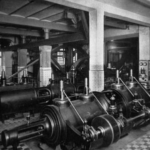
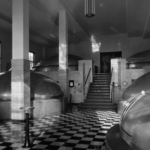
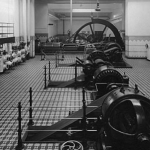
Engine room of the DAB, 1930s

Letterhead dated October 1, 1874 Westphalian Business Archives Foundation, Dortmund
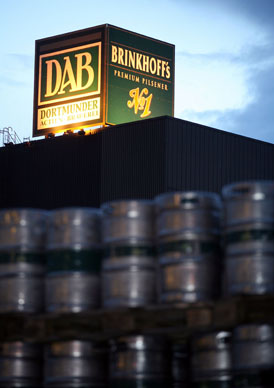
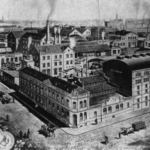
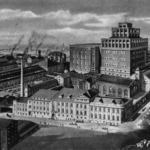
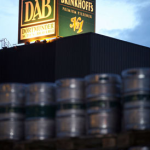
Dortmunder Actien-Brauerei, 2006

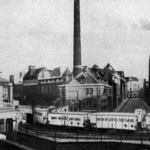
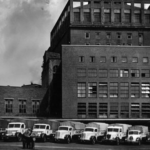
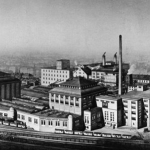
Dortmunder Actien-Brauerei, 1930s

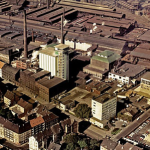
Dortmunder Actien-Brauerei, um 1962
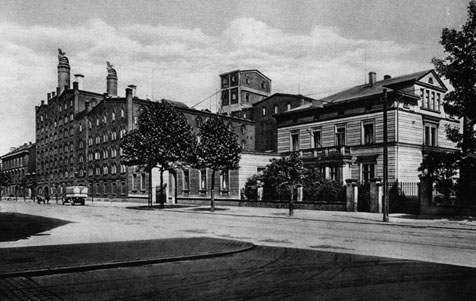
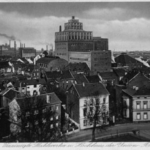
Dortmund Actien-Brauerei from Rheinische Straße, 1920s
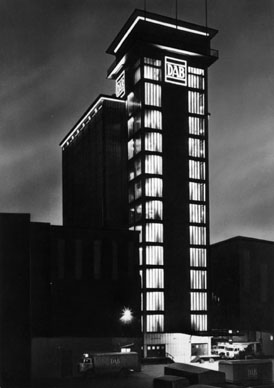
DAB Silo High-rise, 1960s Dortmund City Archives
The Dortmunder Actien-Brauerei was founded in 1868 as Dortmunder Bierbrauerei Herberz & Co. and converted into a stock corporation in 1872. Today, DAB is the only brewery in Dortmund and belongs to the Radeberger Group.
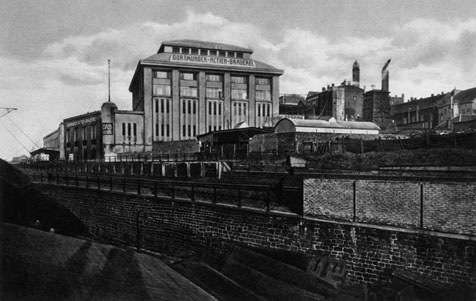
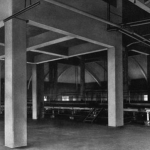
DAB fermentation and storage cellar building, 1920s

DAB fermentation and storage cellar building, in the foreground left sprinkler condensers, 1920s
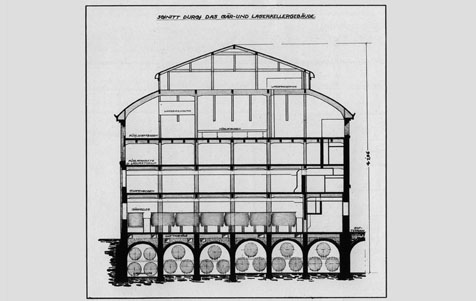
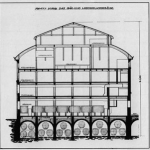
Section through the fermentation and storage cellar building

DAB refrigerated ship facility, 1930s
The DAB’s fermentation and storage cellar, newly built in 1912/1913, is an early example of the then new, functional style in brewery architecture.
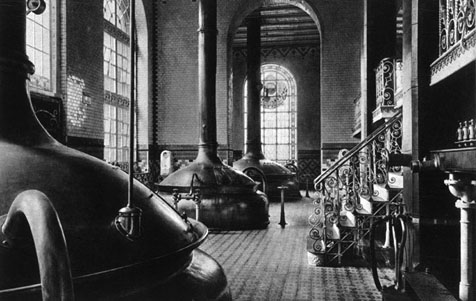
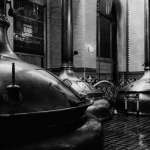
Brewhouse, 1920s
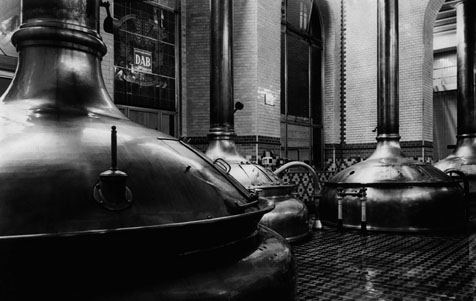
DAB Brewhouse, 1950s/1960s Dortmund City Archives
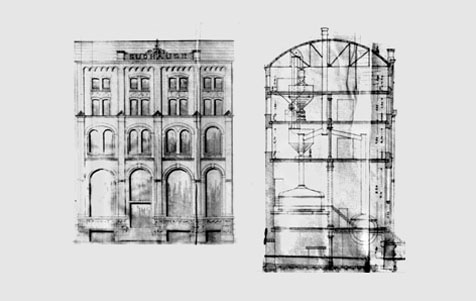
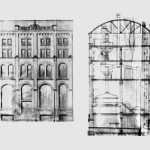
Elevation and cross-section of the DAB brewhouse, 1898 Westphalian Business Archives Foundation, Dortmund
The façade of the DAB brewhouse, built in 1898, is elaborately structured with pilasters and cornices. Also noteworthy are the magnificent stained-glass windows.



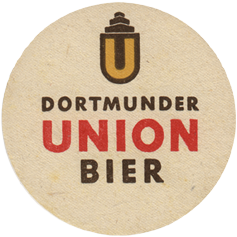
Dortmund Union-Brewery
The founding of the Dortmunder Union Brewery took place in just a few steps. In 1870, innkeeper, baker, and home brewer Wilhelm Struck converted his business, located on Westenhellweg, into a general partnership. His partners were Heinrich Leonhard Brügman and mine director August Randebrock. The new company relocated the brewery to a site outside the old city center. In 1872, production began under brewmaster Fritz Brinkhoff. On January 30 of the following year, the Dortmunder Union Brewery Joint Stock Company was officially established. From the 1880s onward, the DUB developed not only into the largest brewery in Dortmund but also into the most profitable brewery in Germany. By 1929, the DUB had already reached an output of nearly 1 million hectoliters. This success was due to a clever business strategy during the war years and significant investments in expansion and modernization during the inflation period.
After World War II and the subsequent reconstruction, the company continued on its accustomed path of success. By the second half of the 1950s, production had already surpassed the 1929 level. Among various acquisitions, the purchase of Apollinaris-Brunnen AG in 1956 particularly marked the beginning of a new expansion strategy aimed at forming a comprehensive beverage group. In the 1960s, through further acquisitions, DUB expanded from a regional to a national presence. In addition to its older subsidiary, the Iserlohn Brewery, DUB acquired the Germania Brewery in Münster, Kurfürstenbräu AG in Bonn, the Frankfurt Brewery, Bergische Löwen Brewery in Cologne-Mülheim, Xaver Münch Brewery near Munich, Schwabenbräu AG in Düsseldorf, and in 1970 the Bochum-based Schlegel-Scharpenseel Group. In 1972, DUB merged with Schultheiss Brewery to form Dortmunder Union-Schultheiss Brewery Joint Stock Company. In 1988, the company was renamed Brau und Brunnen AG.
However, the expansion course continued into the 1980s and 1990s despite a decline in output. In 1998, Brau und Brunnen ranked second among the major German brewery groups, with an annual output of nearly eight million hectoliters. From 1993 to 2005, the Dortmunder Union Ritter Brewery operated in a newly built facility on the site of the former Dortmunder Ritter Brewery, before it too was shut down.
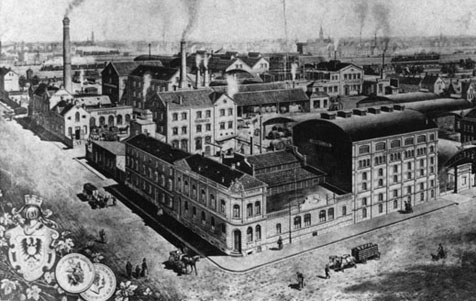
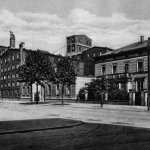
Dortmunder Union-Brauerei, 1909
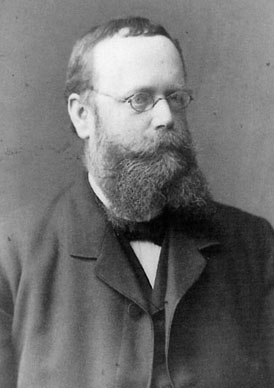
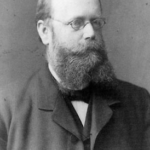
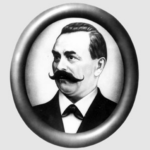
Heinrich Leonard Brügman (1832-1893), co-founder of the Dortmund Union Brewery Company Westphalian Economic Archives Foundation, Dortmund
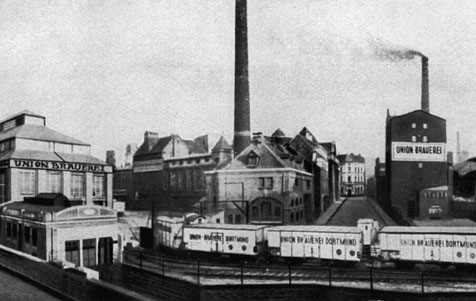
Dortmund Union Brewery, before 1926
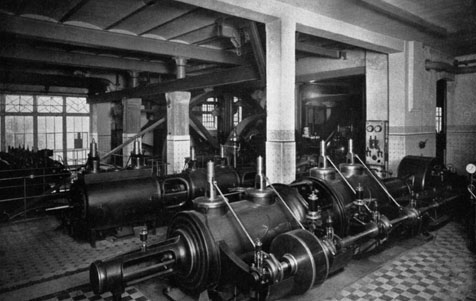
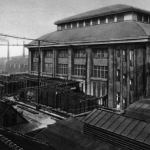
Engine house of the DUB, 1926/27

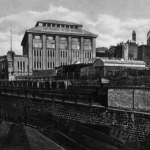
Dortmunder Union-Brauerei, 1927

Fritz Brinkhoff (1848-1927), first master brewer of the DUB Westphalian Business Archives Foundation, Dortmund

Brewhouse of the DUB, 1950s Dortmund City Archives
The Union Brewery was founded as a joint-stock company in 1873. From the late 19th century onward, it was the largest brewery in the city and, after World War II, for a long time the largest brewery in West Germany. In 2005, production at the Lütgendortmund site was discontinued.
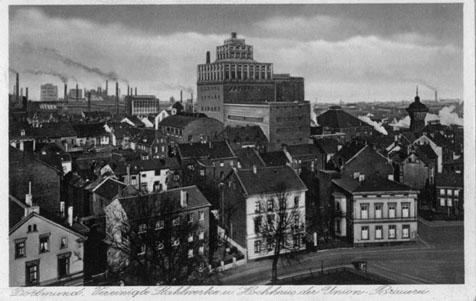
The DUB fermentation and storage cellar building on a postcard dated August 26, 1932 Dortmund City Archives
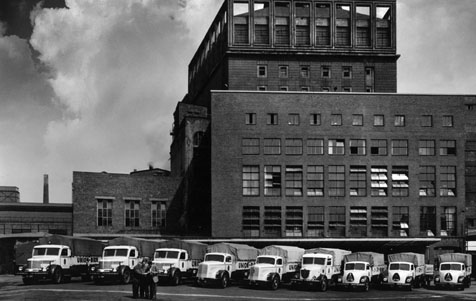
Fermentation and storage cellar building of the DUB, 1950s Dortmund City Archives
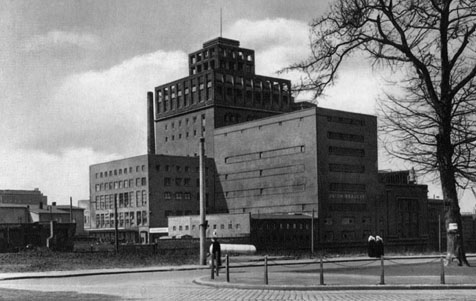
Fermentation and storage cellar building of the DUB, 1950s Dortmund City Archives
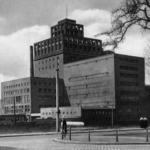
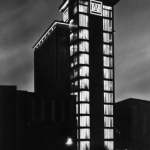
The fermentation and storage cellar high-rise of the Union Brewery was built in 1926. In 1968, the illuminated “U” was installed on the roof. The Union Tower is considered a landmark of Dortmund and is now a protected historic monument.